What usually decides it
There is a general rule in the trade that a like-for-like swap is a one-day job and anything else is longer. That holds often enough to be useful, but it is a starting point rather than an answer, because the work is not really about the boiler. It is about everything the boiler connects to.
The question that matters is whether the new appliance is going in the same place, on the same pipework, with the same flue route. When all three are true, the job is contained. When any one of them changes, the time changes with it.
This is why a reputable installer will not give you a firm timescale down the phone. Until someone has seen the existing setup, any number is a guess, and the ones that turn out to be wrong are always wrong in the same direction.
A straight swap
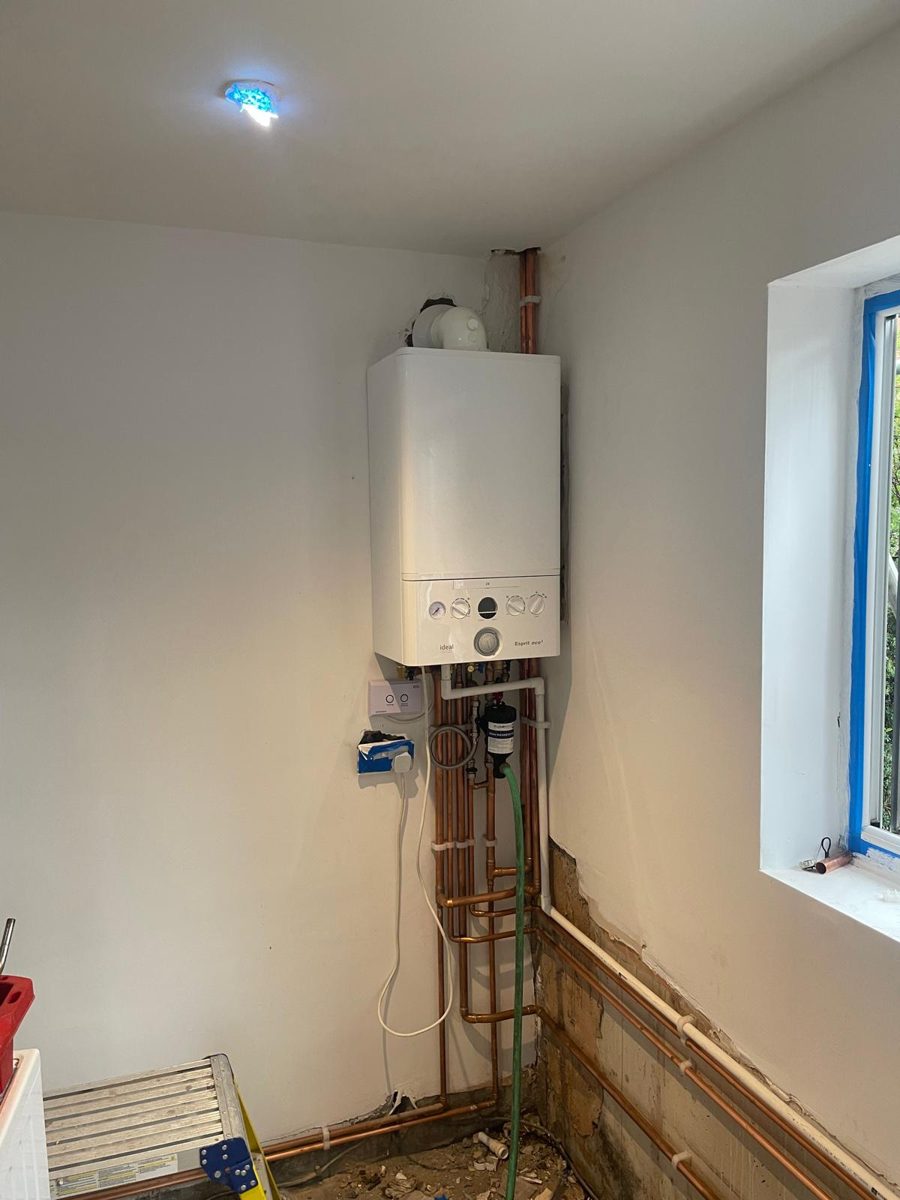
This is a modern boiler coming off the wall and another going back in roughly the same position. The gas supply is already adequate, the flue hole is already there, and the pipework underneath can be reconnected with minor adjustment.
The work is draining the system down, disconnecting and removing the old appliance, mounting the new one, reconnecting gas, water and condensate, flushing or treating the system, then commissioning and testing. Most of the day is the careful parts at either end rather than the boiler itself.
What makes it take longer
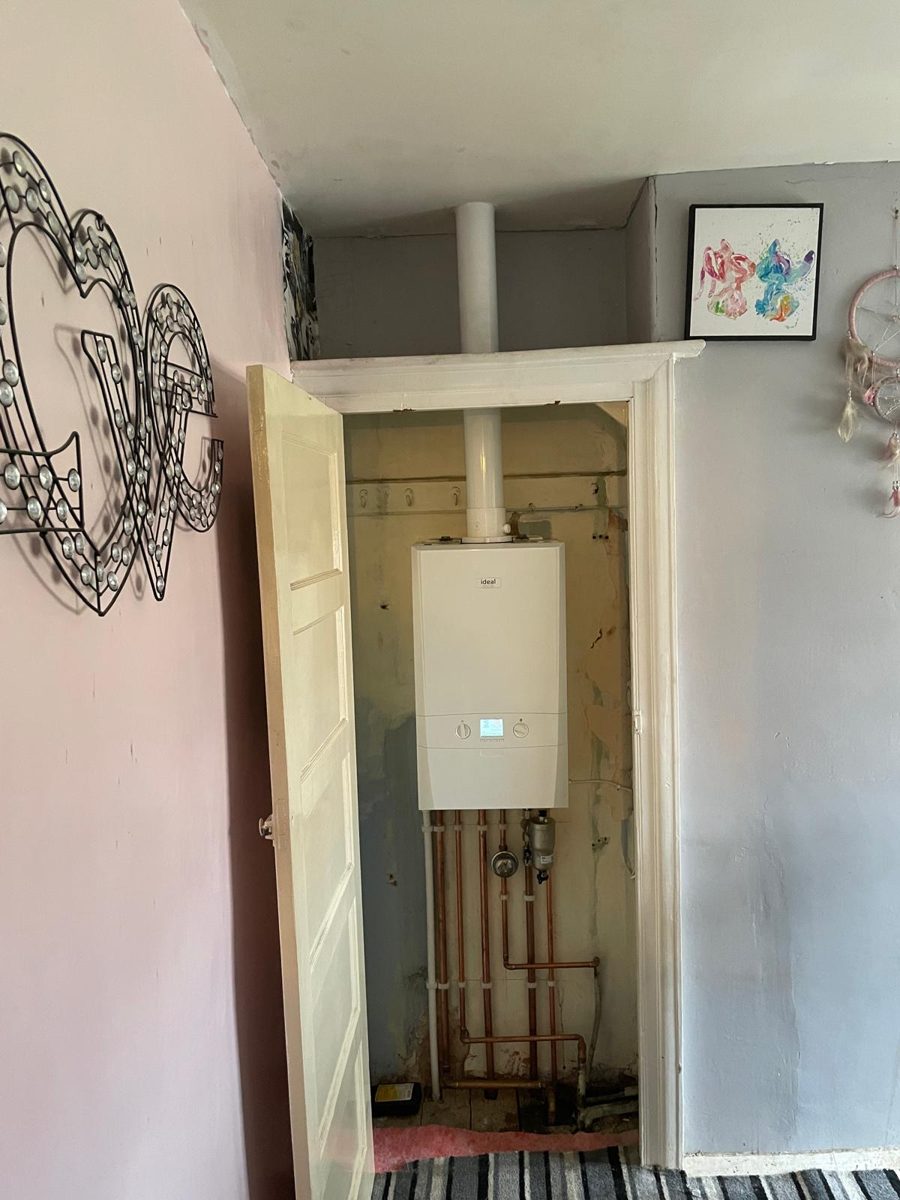
Moving the boiler to a different room is the big one. A new position means a new flue route, a longer gas run, a condensate drain that has to reach somewhere sensible, and pipework re-run from wherever the old appliance was. None of that is difficult, but it is all additional work and some of it is in walls and floors.
Removing a back boiler is a job of its own. The fire comes out, the appliance comes out of the builder's opening, the chimney needs dealing with and the new boiler goes somewhere else entirely, leaving a hole in the living room wall to make good.
Changing boiler type adds time too. Going from a system boiler and cylinder to a combi, or the other way, changes how the hot water works throughout the house, so the pipework changes with it.
Then there are the things nobody can see in advance. Old pipework that will not take modern system pressure, a gas supply that needs upgrading to carry the new appliance, or corrosion that only becomes visible once the system is drained. A good survey predicts most of these, but not all of them.
What happens on the day
The system gets drained before anything comes off the wall, so the heating and hot water go off early and stay off until commissioning. That is worth planning around if there is anyone in the house who needs it, and worth saying in advance if so.
Expect some noise, particularly if a flue hole is being cut. Most of the mess is contained to the area around the old and new boiler positions, though a boiler move spreads that further.
At the end the engineer commissions the appliance, tests it, and should run through the controls with you rather than just leaving. You should also receive the paperwork, including the Building Regulations notification and the manufacturer warranty registration.
What helps it go quickly
Clear access to the old boiler, the new position, the gas meter and the stopcock saves a surprising amount of time. So does somewhere to park reasonably close, because everything comes out of and goes back into the van.
If you know where the stopcock is, where the gas meter is and whether anything has been altered since the last boiler went in, say so at the survey. The more that is known before the day, the fewer surprises there are on it.
Last updated 2 November 2026